Everything You Should Know About Dental Implants
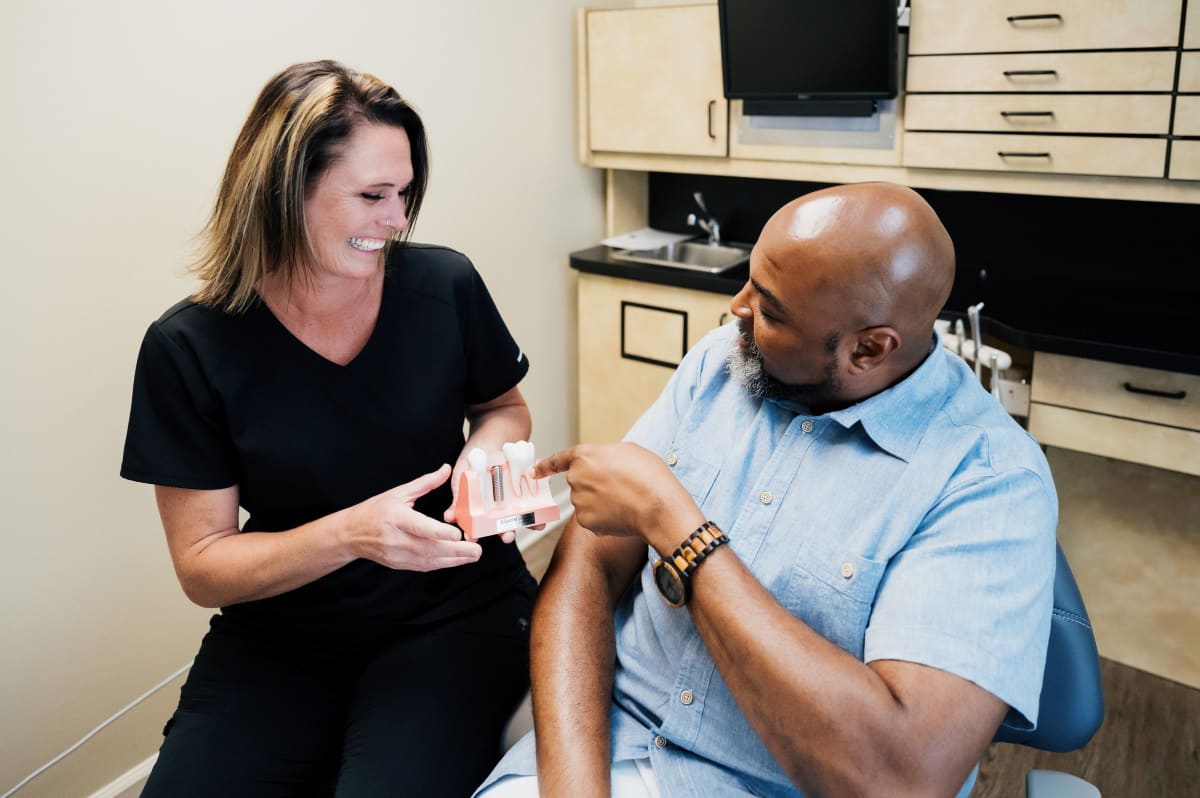
Losing a tooth can leave you with more questions than just how to fill the space. You may be wondering whether you need to replace it at all, how long treatment takes, what recovery involves, and how dental implants compare with bridges or dentures.
Dental implants are one option for replacing missing teeth. Unlike a bridge or traditional denture, an implant is designed to replace the tooth root as well as the visible portion of the tooth. A small implant post is placed in the jawbone, where it can eventually integrate with the surrounding bone. Once healing is complete, the implant can support a restoration such as a crown, bridge, or full-arch prosthesis.
At Carolina Crossroads Dental Care, Dr. Spears and our team can help you understand whether dental implants may be appropriate for your situation. The right choice depends on factors such as your oral health, available bone, the number of teeth being replaced, and your overall treatment goals.

A dental implant is a small post, commonly made from titanium, that is surgically placed into the jawbone to replace the root of a missing tooth.
The visible replacement tooth is added later. For a single missing tooth, this is typically a custom dental crown attached to the implant with an abutment. The result is a tooth replacement that is supported by the jawbone rather than by the neighboring teeth.
That distinction is important when comparing implants with other options. A traditional bridge uses the teeth next to the missing tooth for support, while a removable denture rests on the gums. An implant is anchored within the jawbone itself.
There are also potential benefits beyond replacing the visible tooth. When a natural tooth is lost, the surrounding bone no longer receives the same stimulation from the tooth root and can gradually decrease in volume. An implant can provide stimulation to the surrounding bone and may help limit this type of bone loss.
Implants aren't appropriate in every situation, though. A thorough evaluation is necessary before deciding whether they make sense for you.
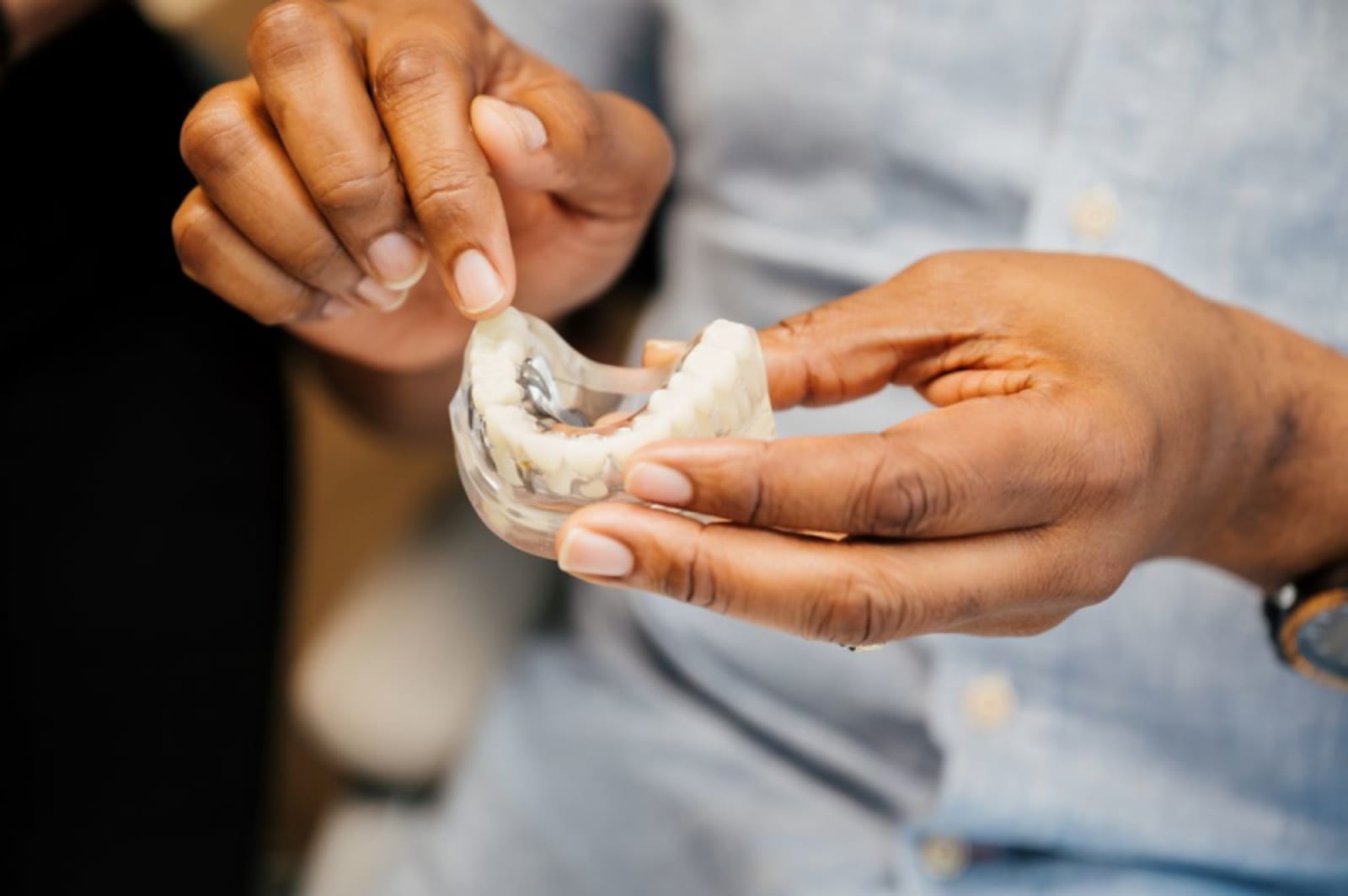
Dental implant treatment usually takes place in several stages. The exact sequence can vary depending on your oral health, the number of teeth being replaced, and whether additional procedures are needed.
Treatment begins with an examination of your teeth, gums, and jaw. Your dentist may use dental X-rays or 3D imaging to evaluate the available bone and determine where an implant could be positioned.
This appointment is also an opportunity to discuss your goals and the different tooth-replacement options available to you. If you have existing gum disease, insufficient bone, or another concern that could affect treatment, those issues may need to be addressed first.
During implant surgery, the implant post is placed into the jawbone at the site of the missing tooth.
The procedure is typically performed with local anesthesia, although additional options for comfort may be available depending on the practice and your needs.
After placement, the implant needs time to heal before it can support the final restoration.
Osseointegration is the process in which the jawbone gradually integrates with the implant surface.
This is an important part of implant treatment because the developing connection provides the stability needed to support the restoration. Healing times vary from person to person, so your dentist will determine when the implant is ready for the next stage.
Once the implant has healed sufficiently, an abutment may be attached to the implant. This connector provides a foundation for the final restoration.
For a single missing tooth, the final restoration is usually a custom crown designed to fit naturally with your surrounding teeth.
The entire process can take several months. While that may seem lengthy compared with other tooth-replacement options, much of the timeline is determined by the body's natural healing process.
Dental implants can be used in many different situations, but candidacy isn't determined by whether you're simply missing a tooth.
Your dentist will need to consider the health of the tissues supporting the implant, including your gums and jawbone. Some of the factors that may affect candidacy include:
An implant needs adequate bone for support. Bone loss is common after a tooth has been missing for some time, which can make implant placement more complicated.
In some cases, a bone graft or another procedure may be recommended to rebuild the area before implant treatment. Having experienced bone loss doesn't necessarily mean implants are off the table, but it may change the treatment plan and timeline.
Healthy gums are an important part of successful implant treatment. Active periodontal disease can damage the tissues and bone surrounding an implant, so gum disease may need to be treated before an implant is placed.
Your general health and ability to heal after surgery are also considered. Certain medical conditions and medications can affect healing or increase the risk of complications. Smoking and tobacco use can also interfere with healing and implant integration.
Long-term implant health depends on keeping the surrounding tissues clean and healthy. Your ability and willingness to maintain good oral hygiene is therefore an important part of the conversation.
Ultimately, candidacy can't be determined from a checklist alone. An examination and appropriate imaging are needed to understand whether an implant is a reasonable option for you.
The type of implant treatment you need depends largely on how many teeth you're replacing and where those teeth are located.
A single implant can replace one missing tooth without requiring the neighboring teeth to support the restoration. The implant is placed in the jawbone and eventually supports an individual crown. This can be an option when one tooth has been lost because of decay, injury, infection, or another cause.
When several adjacent teeth are missing, an implant-supported bridge may be used to replace them. Rather than placing an individual implant for every missing tooth, strategically positioned implants can support a bridge that replaces multiple teeth.
Whether this approach is appropriate depends on your anatomy, the location of the missing teeth, and the condition of the surrounding bone and gums.
People who are missing most or all of their teeth may be candidates for a full-arch restoration supported by dental implants. Instead of using a traditional removable denture, several strategically placed implants can provide support for a full arch of replacement teeth.
This type of treatment is considerably more involved than replacing a single tooth, so the planning process is particularly important.
The cost of dental implants varies considerably because implant treatment isn't a single procedure with a single fee.
The total cost may include the implant itself, imaging, surgical placement, the abutment, the final restoration, and any additional procedures that may be necessary. For example, someone who needs a bone graft before implant placement will have a different treatment plan from someone who already has sufficient bone.
Insurance coverage also varies. Some dental plans may contribute toward certain portions of implant treatment or related procedures, while others provide limited or no coverage for implants. Because of those variables, it's more useful to discuss the cost of your specific treatment plan rather than rely on a generic implant price.
At Carolina Crossroads Dental Care, we can explain what is involved in your recommended treatment and discuss available payment or financing options before you move forward.
Dental implants aren't automatically the right choice for everyone. Bridges and dentures remain established options for replacing missing teeth, and each approach has advantages and limitations.
A traditional bridge fills a gap by attaching a replacement tooth to neighboring teeth. One advantage is that treatment doesn't require surgical placement of an implant. Bridges can also provide a fixed replacement that doesn't need to be removed for daily use.
The tradeoff is that the supporting teeth generally need to be prepared to accommodate the bridge.
Dentures can replace several missing teeth or an entire arch and are removable for cleaning and maintenance.
They can be an accessible option for people who aren't candidates for implants or who prefer a removable restoration. However, traditional dentures don't replace the tooth roots, and they can become less stable as the shape of the jaw changes over time.
Implants are anchored within the jawbone and can support individual crowns, bridges, or full-arch restorations. They don't require neighboring teeth to provide support, and the implant can help maintain stimulation of the surrounding bone.
The tradeoffs are that treatment requires surgery, healing takes time, and implants generally involve a greater initial investment than some other replacement options. The best choice depends on your oral health, anatomy, goals, timeline, and budget. A consultation can help you compare those factors rather than choosing based on one benefit alone.
Recovery varies depending on the number of implants placed and whether additional procedures were performed.
After implant placement, it's common to experience some soreness, swelling, or bruising around the surgical area. Your dental team will give you specific instructions for managing discomfort and protecting the area during the initial healing period.
For the first several days, you may be advised to:
The initial recovery period is only one part of healing. The implant continues integrating with the surrounding bone for several months, even after you're feeling back to normal.
If you experience significant or worsening pain, swelling that doesn't improve, persistent bleeding, fever, or another concerning symptom, contact your dental office rather than trying to determine on your own whether it's normal.
Once your implant has healed and the final restoration is in place, caring for it is similar in many ways to caring for your natural teeth.
Brush twice a day, clean between your teeth every day, and maintain regular dental visits so we can monitor the implant and the tissues around it.
The fact that an implant can't develop a cavity doesn't mean the surrounding tissues are immune to problems. Plaque and bacteria can contribute to inflammation around an implant, and advanced inflammation can threaten the bone supporting it. That makes gum health especially important.
It's also worth being mindful of habits that can place excessive force on an implant restoration, including:
The implant itself may remain functional for many years, but the crown or other restoration can experience normal wear over time and may eventually need repair or replacement. Regular examinations allow us to monitor both the restoration and the tissues supporting it.
It's reasonable to have questions before committing to an implant procedure. In fact, understanding the treatment plan ahead of time can make the process much easier to navigate.
Consider asking your provider:
The answers should be specific to your situation. A good consultation isn't about convincing you to choose implants. It's about making sure you understand the available options well enough to make an informed decision.

If you're missing a tooth, you don't necessarily have to decide on a replacement option before your first appointment. The first step is understanding what's possible based on your oral health and the condition of the area where the tooth was lost.
At Carolina Crossroads Dental Care, Dr. Spears and our team can evaluate your situation, discuss your goals, and explain the available options. That may include a dental implant, but it could also mean a bridge, denture, or another approach depending on what makes the most sense for you.
You can learn more about implant restoration in Statesville, visit our new patient center, or call (704) 873-2141 to schedule a consultation.
Call 704-873-2141 to set up your first appointment. We look forward to hearing from you!